

![图片[1]-迷茫时,武士道给出了答案:如何找回人生方向-心智夜航](https://xzyh.top/wp-content/uploads/2026/07/xzyh-8022dd99577e443fa02be1d5-e814668c4c1d.webp)
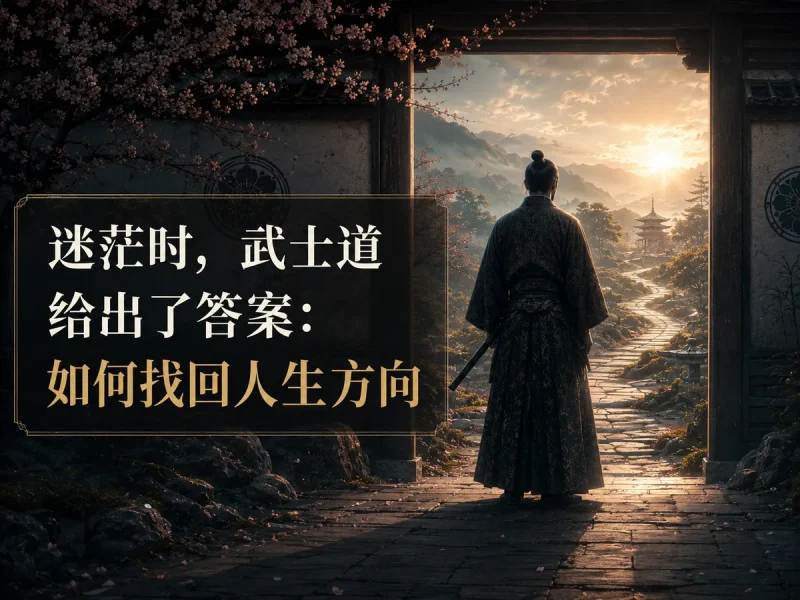
迷茫时,武士道给出了答案:如何找回人生方向。
当生活缺少方向、自由选择反而令人无所适从时,人们往往会开始寻找能长期依靠的行为准则。本课程以新渡户稻造《武士道》中的思想为线索,讨论如何从个人品格与伦理原则中寻找稳定感,而不是完全被外部环境、社会压力或一时情境牵引。
课程梳理义、勇、仁、礼、诚、名誉、忠,以及自制等观念:义是按内心认定的正当原则行动;勇是从义出发做正确的事;仁关乎对他人苦难的体察;礼应建立在关怀与真诚之上;诚强调言语、行为与意图一致;名誉需要尊严、自我约束与宽宏忍耐来守护;忠诚则不应凌驾于良心。
- 理解武士道并非所有武士共同遵守的单一历史体系,而是被整理出的道德哲学。
- 思考传统、共同价值与长期承诺减弱后,为什么人更容易体验到无意义感。
- 借由“房子”的比喻,认识品格与伦理准则如何提供恒常、方向和内在稳定。
- 辨析情境伦理的灵活性与承诺易被背弃之间的张力。
- 正视武士道可能出现的教条主义、盲目忠诚与意识形态化风险。
课程不把武士道当作万能答案,也不将新渡户稻造的著作视为严格的历史记录,而是将其作为建立个人道德体系的一种思想起点。你可以结合自身处境,继续思考哪些原则值得长期实践,以及如何在坚持原则时保留良心、关怀与判断力。
视频文稿
选择适合你的阅读版本
对越来越多的人而言,生活显得毫无意义。我们缺乏明确的方向难以定义自己的人生目标常常发现自己漫无目的地随波逐流。与此同时,世界本身似乎也日益混乱,仿佛许多曾经提供道德指引、稳定和意义的体系与结构正在慢慢崩塌。
尽管我们可能已经解放了自己,享受着前所未有的自由和个人主义但我们中许多人似乎也有些迷失不确定究竟该信仰什么,或坚守什么。
因此,在当今这个动荡而令人困惑的世界里遵循一套行为准则生活,对我们有益处吗?而武士道,能否成为这样的准则呢?
武士道常被描述为武士的准则,是一系列与日本武士阶层相关的美德与原则。然而,历史上从未存在过一套所有武士都普遍遵循的单一准则。直到19世纪末,Nitobe Inazo才在其著名的著作《武士道》中,尝试系统性地阐述武士道。他借鉴武士的理想,将武士道阐述为一种道德哲学,适用于任何追求美好生活的人。
本视频将探讨武士道,探讨它能否在一个失去行为准则的世界里为我们指引方向,并在最后提出一些思考和批评。
我是斯蒂芬。如果你喜欢我的作品你可以在Substack上订阅我的通讯。你也可以在Patreon上支持我我的书在亚马逊上有售。谢谢,希望这个视频能让你有所收获。
在我们深入探讨武士道准则之前我认为了解它是如何以及为何形成的,很有价值。那么,让我们从一点历史开始。如果你对此不感兴趣,想直接了解武士道准则,可以跳过这部分。
武士道这一概念,历经了数个世纪的演变。其起源可追溯至镰仓时代,当时武士作为军事阶层崛起掌权。这些武士重视纪律、忠、勇和名誉等品质,遵循着不成文的道德与行为准则,这些准则后来构成了被称为武士道的体系。
几个世纪以来,武士在日本社会中占据着特殊地位。他们既是战士,也是行政管理者,属于特权阶层。但在19世纪,古老的武士阶层秩序开始瓦解。日本向外部世界敞开国门,国家迅速实现了现代化。
尽管武士作为一个社会阶层已消逝在历史中,但与之相关的理想却并未随之消亡。在这剧变的时代,一位名叫新渡户稻造的人试图保存并阐释这些理想。
新渡户稻造是一位日本外交官、政治学家、政治家和作家,并视自己为日本与西方之间的桥梁。他曾在欧洲和美国的大学学习,甚至皈依了基督教。当一位比利时律师问他,在没有宗教教育的情况下,日本的道德教育如何可能时,新渡户稻造意识到,自己的道德观与善恶观,都植根于武士道。
在一次患病期间,新渡户着手用英语来阐述武士道的含义。但这并非易事,因为他试图描述的,是一种从未被系统记载、且历经数百年在不同地方自然发展而成的东西。
诚然,武士道的诸多方面,散见于日本的各种武士文献中。其中最著名的例子,当属宫本武藏所著的《五轮书》与《独行道》。其中的《独行道》,我在多年前就曾探讨过。但当时并不存在一套被普遍接受的单一准则。
尽管如此,新渡户还是接下了这个挑战。他在其著作《武士道》中,主要为西方读者界定了武士道。他的作品既获得了赞誉,也遭到了批评。新渡户笔下的武士道,是否真实反映了武士的生活方式,至今仍有争议。
但撇开这些争论不谈,它依然是一份极具启发性的人生指南。它融合了儒家思想、佛教、神道教,乃至基督教的理念。我认为,这正是它如此独特的原因之一。
现在,我们来探讨一下其行为准则。这样我们在试图回答主要问题时,就能有更实质性的内容。今天,武士道还能使我们受益吗?
当我们想到武士道时,可能会想象自己手持利刃,与任何挑战者决斗。我们可能会想象这样一种生活:纪律严苛、无所畏惧,终日习武,以硬地为床,过着近乎僧侣般的生活,但却是些不惮于杀戮的僧侣。
但Nitobe Inazo所阐述的武士道,远不止是一种美学。其核心是一套道德准则,一种处世之道,它体现了日本精神,并且他认为,日本人民的诸多成就都归功于此。
新渡户稻造在《武士道》中提出了七大道德原则:义、勇、仁、礼、诚。名誉,以及忠。不过,这本书也专门用一章来讨论第八项品质——自制。但我们还是先聚焦于这七大官方美德。我们就从‘义’开始讲起。
‘义’,在日语中发音为‘gi’。新渡户视其为武士道品格的脊梁。他在书中引用了日本军事学者林子平的话:‘义’为我们的人生指引方向。它要求我们基于自己认为对的事情做出决定,并始终如一地按照这个决定行事。在一个充满无尽选择的世界里
‘义’能防止我们在各种承诺中摇摆不定,无论是婚姻、家庭、健康,还是某项创造性的追求。新渡户还提到了儒家哲学家孟子,孟子称‘仁’为人之心,‘义’为人之路,并认为如果我们舍弃了这条路,也就会失去本心。
但这里还有一个提醒。新渡户告诫我们,不要把‘义’与单纯的义务混为一谈。他认为,义务就像一位严厉的监工,很容易就沦落为怯懦的恐惧,或是屈服于社会的非议。相比之下,义必须源自内心。
下一个原则是勇。勇,日语称为‘yu’,并不意味着要当一个寻求刺激、悍不畏死的莽夫。勇只有在从义出发去践行时,才是一种美德。用新渡户稻造自己的话说,勇就是做正确的事。
这意味着,根据儒家思想,如果我们认为某个行为是正确的,但如果我们克制自己不去做,那便是缺乏勇气。这可能意味着,对理应干预的不公视而不见,在该道出逆耳真相时保持沉默,或是贪图安逸而背弃原则。
新渡户警告说,“犬死”意为为不值得的事业而死,这并非真正的勇气。
有时,克制行动才是最明智、最勇敢的选择。有时,更好的选择是活下去,如果活下去是正确的。
下一个原则是仁,或称慈悲。仁,日语中称为“jin”,是一种善待并帮助他人的品质,体现为仁爱、宽厚、同情、慈悯乃至怜恤。它意味着体察受苦之人,并顾念他们的痛苦。
孔子与孟子都将仁视为对统治者的最高要求。后者认为,无仁之君难以赢得民心。
新渡户稻造将仁视为一种温和的美德,能柔化武士道中义与正义的刚性。然而,若无这些更为刚正、严苛的美德,仁便失了其真义。正如武士伊达政宗所言。义若过度,则僵化为刻板。仁若无度放纵,则沉沦为软弱。
下一个原则是礼貌或尊重。当我们许多西方人想到日本时,最先浮现在脑海的,便是其礼貌文化,而这恰好也是武士道的一项美德,日语中称为“礼”。
新渡户稻造认为,若礼貌源于恐惧,便算不得美德,也就是,仅仅为了避免冒犯他人而表现出的礼貌。礼貌应是我们对他人情感的体察与关怀的体现。
正如新渡户稻造所言礼貌在最高形式上几乎接近于爱。
礼貌是日本繁复礼仪体系的一部分,涵盖从鞠躬、行走到餐桌礼仪的方方面面。仪式与身体规训是训练身心的方法,旨在实现精神对肉体的主宰,正如新渡户所称。但即便这些礼貌形式看似造作,它们也必须发自真诚。
这就引出了下一个原则。真诚,或称诚实。真诚,在日语中即‘诚’。就是指我们的言语、行为和意图保持一致。若无此心,我们的言行就无异于一场表演。新渡户稻造甚至将缺乏真诚的礼节称为一场闹剧。
如今,我们称缺乏真诚的人为虚伪。这种人言不由衷,行不由心,或进行虚伪的奉承。
在一个诚信有时反成劣势的世界里虚伪也成了达成目的的一种手段。但从武士道的角度来看这种行为,与撒谎和欺骗并无二致。
当我们真诚时我们心口如一一诺千金。任何人都可以轻易许诺或奉承。真正的价值在于始终如一地践行承诺。
真诚有时可能显得不利。谎言、夸大其词或半真半假的话往往能更快见效。然而,信任是一个人最宝贵的财富之一。而信任只能通过长期保持诚实来建立。
接下来要讲的是荣誉。荣誉感,或者说名誉,深深烙印在武士精神之中。最能说明问题的一个例子,就是切腹。这是一种仪式性的自杀行为,用以赎罪、恢复家族荣誉或向主君效忠。
在新渡户稻造看来,荣誉包含着对个人尊严与价值的鲜明意识。这两者与个人的地位、声誉和羞耻感密切相关。
孟子认为羞耻是件好事,新渡户引用了历史学家托马斯·卡莱尔的话,说羞耻是所有美德的土壤。它关乎良好的礼仪与道德。在武士道中,羞耻心是名誉的保障。当我们的行为不及自我设定的标准时,它会提醒我们。
但据新渡户所言,并非所有以名誉之名做出的行为都是正确的。例如,一些武士在受到冒犯时会迅速拔刀。但这样的态度是虚荣,而非真正的名誉。正如他所写,真正的名誉不会忽视其他美德。这套精微的名誉准则容易滑向的病态极端,通过宣扬宽宏与忍耐,得到了有力的制衡。为了一点小事就动怒,会被嘲笑为气量狭小。引文结束。
现在,我们来到最后一项原则——忠。忠诚,或者说‘忠义’这个概念我认为是这七项中最具争议的,因为我通常对整个‘忠诚’现象都抱有怀疑,尤其是那些要求臣民忠诚的掌权者,以及那些盲目追随的人。不过,暂且抛开我个人的观点,我们来看看新渡户稻造是如何阐述它的。
根据他的著述,忠诚是武士道的典型特征。具体表现为效忠于更高的权威,比如封建领主或天皇。幸运的是,他也认识到了盲从的危险。人不该让自己的良心沦为国王或领主的奴隶。
在过去,当武士面对其主君的糟糕决策时,他会竭尽全力去改变上级的想法。而当他失败时,通过切腹来表明诚心,也并不少见。
那么,武士道准则在当今能如何使我们受益呢?它能否帮助我们在这动荡而迷茫的世界中找到方向?在我们尝试回答这些问题之前让我们更仔细地审视一下我们今天的处境一个许多人声称感到生活漫无目的、缺乏意义的时代。
传统道德指引来源的式微共同价值观的缺失以及稳定原则的匮乏,是否与这些感受有关?
哲学家韩炳哲写道,如今时间缺乏坚实的根基。时间无法构成一个家园一处可以栖居的所在但它已化作一股不稳定的洪流。它奔流不息。我们无从把握。
他将智能手机描述为这种状态的缩影因为它缺乏这种保持不变的属性而正是这种属性,给我们的生活带来稳定。尽管韩炳哲是在探讨仪式时提出此观点的但我认为,他对当今时间体验的‘诊断’,仍引起了许多人的共鸣。
可供立足的坚实之地越来越少我们的生活,似乎方方面面都是如此。如今,似乎很少有东西是稳固不变的。
我的意思是,我们得面对现实。我们生活在一个不断加速的时代。技术飞速发展。我们的工作方式和人际交往方式也在不断变化。习俗与传统已变得越来越可有可无。人际关系也更加脆弱,被视为神圣的事物也比过去少了许多。
以婚姻为例。传统上,婚姻被视为一种终身的承诺。它被视为神圣的,人们也应信守不渝,即便处境变得艰难。
如今,至少在西方,许多人对婚姻的看法已不同。他们不再将其主要视为一种终身的纽带,而是认为,婚姻首先
应有助于个人的幸福与自我实现。而当它不再如此时,结束婚姻常被视为一种合理的选择。
在她的著作《让武士指引你》中,劳里·津川·惠利认为,现代社会正日益依赖她所说的‘情境伦理学’。我们不再依靠稳定的原则或道德准则,而是常常根据具体情况本身来评估,判断怎么做才最合适。问题在于,每种情况都变成了一场谈判。每当外部情况变化,或是我们自身发生改变时,我们便会陷入思考:是坚持原路,还是另辟蹊径。于是,承诺与责任也变得更容易背弃。尽管这种灵活性有它的好处,我们很难找到某种持久的东西作为依凭。从而感到人生漫无目的。
那么,我们来看看武士道能在此扮演何种角色。如前所述,武士道提供了一套伦理体系,借用韩炳哲的比喻,它就像一座可供栖居的房子。我们可以栖身于此,以免在人生中漫无目的地漂泊,在这个瞬息万变的世界里,给予我们一份恒常。
然而,这座房子并非由木石所筑,而是由品格构成。武士道鼓励我们去思考,自己想成为什么样的人。我们是否想成为值得信赖、品格高尚、体贴他人的人?我们是否希望自己的话有分量,能许下承诺并信守承诺?也许,我们感到如此迷失,部分原因在于我们不再知道自己该成为怎样的人,或者该坚守什么信念这让在一个本就动荡的世界里前行,变得难上加难。
一套行为准则无法改变我们的外部处境但它能让我们在身处其中时,为自己的行为确立稳定的方式。而这一点,终究更掌握在我们自己手中。
Nitope的著作也引发了一些合理批评,值得深思。首先,存在一个教条主义的陷阱。这不仅适用于武士道,也适用于任何道德准则。例如,‘义’这种美德,就可能轻易退化为僵化。我们可能就会留在一段明显虐待性的婚姻里,因为我们相信承诺应不惜一切代价去信守。而‘忠’,如前所述,也可能变成盲从,导致人们不加质疑地追随权威。
我们也曾见过武士道被用于意识形态目的。在二战之前和期间,各种版本的武士道被用来支持日本的极端民族主义和军国主义。从而引发了可怕的暴行与战争罪行。
一个主要的批评是,它可能过于西化了。新渡户稻造是基督徒,他用英文为西方读者撰写了这本书。这很可能影响了他对这套准则的阐述。因此,有人质疑它是否真实反映了武士的生活。因为它更像是为西方读者打造的一个理想化版本。所以,或许我们与其将新渡户的著作视为历史记载,不如将其看作一种哲学。
最后回答我们的核心问题。是的,我认为武士道,尽管有其缺陷,在一个充满不确定性、模糊性与剧变的世界里,它能为我们提供道德指引、内心安定与目标感,从而让今天的我们受益。但我并不认为武士道就是我们翘首以盼的终极答案,是那个包治百病的万灵药。世上存在着许多值得探索的伦理体系与道德准则其中某些体系,可能比其他的更适合我们。或许,最好将它视作一份遵循准则的生活蓝图,一个用以建立自身道德原则体系的起点。
在我看来,武士道最大的长处在于它改变了我们生活的范式。它将我们的关注点,从外在的境遇转向内在的品格。因此,人生的满足感,较少来自我们遇到什么事,或身处何种环境,而更多在于我们如何回应这些际遇。
我真的很沉醉于对武士道的探究,也很认同遵循一套准则来生活这种理念,主要是因为它能作为一种平衡力量,来抗衡当今这个混乱的世界。拥有一个道德支柱,能帮助我们在充满不确定、需要抉择以及道德困境时,避免迷失自我,这在我看来是很有帮助的,尽管我个人更偏向于情境伦理学。
我个人觉得,新渡户稻造对东西方的融合很有意思。我们看到,儒家、佛教、神道教,甚至基督教的元素,都被融合进了一套单一的伦理体系。也许这就是它能引起我共鸣的一个原因。在我的哲学探索中,很大一部分都涉及了对东西方传统的探究。而武士道似乎融合了二者的某些方面。或许这也是其原则具有某种普世性的原因。
与其让对武士道的探讨止步于此,我们可以在未来的视频中,继续逐一探讨它的各项美德。因为我认为,义、勇、仁、礼、诚、名誉以及忠,这些美德本身都是极有价值、值得探讨的议题。如果你对此感兴趣,欢迎告诉我。感谢观看。
For more and more people, life feels meaningless. We lack clear direction struggle to define our purpose and often find ourselves drifting aimlessly. Meanwhile, the world itself seems increasingly chaotic, as though many of the systems and structures that once provided moral direction, stability, and meaning are slowly falling apart.
And while we may have liberated ourselves, enjoying more freedom and individualism than ever before many of us also seem somewhat lost unsure of what to truly believe in or stand for.
So, in today's tumultuous and confusing world would we benefit from living by a code? And could Bushido be it?
Bushido is often described as the samurai code, a collection of virtues and principles associated with Japan's warrior class. Yet, there was never a single universally accepted code that all samurai followed. It was only in the late 19th century that Nitobe Inazo attempted to systematically describe Bushido in his famous book, The Soul of Japan. Drawing on the ideals of the samurai he presented Bushido as a moral philosophy for anyone seeking to live a good life.
This video explores Bushido whether it can guide us in a world that has lost its code, and ends with some final thoughts and criticisms.
My name is Stefan. If you enjoy my work you can subscribe to my newsletter on Substack. You can also support me on Patreon and my books are available on Amazon. Thank you, and I hope you'll enjoy this video.
Before we move on to the Bushido code I think it's valuable to understand how and why it was created. So let's start with a little bit of history. If you're not interested in this and want to go directly to the code, feel free to skip this part.
Bushido as a concept evolved over the centuries. Its origins can be traced back to the Kamakura period when the samurai rose to power as a military class. These warriors valued traits such as discipline, loyalty, courage, and honor living by unwritten ethics and codes of conduct that would later contribute to what became known as bushido.
Now, for centuries, the samurai occupied a special place in Japanese society. They were warriors, administrators, and members of a privileged class. But in the 19th century the old samurai order began to disappear. Japan opened itself to the outside world and the country rapidly modernized.
Even though the samurai as a social class faded into history the ideals associated with them did not. During this period of massive change a man named Nitobe Inaso sought to preserve and explain these ideals.
Nitobe Inazo was a Japanese diplomat, political scientist, politician, and writer and saw himself as a bridge between Japan and the West. He studied at universities in both Europe and the United States, and even converted to Christianity. When a Belgian lawyer asked him how moral education in Japan could be possible without religious education Nitobe Inazo realized that his morals and understanding of good and evil were rooted in bushido.
During a period of illness Nitobe set out to describe, in English, what bushido meant. But this wasn't an easy task and he was trying to describe something that had never been systematically written down, and had developed organically over the centuries in different places.
Sure, many aspects of Bushido can be found throughout Japanese warrior literature. Some of the most famous examples are the Book of Five Rings and Dokudo written by Miyamoto Musashi the latter of which I explored years ago. but there was no single universally accepted code.
Still, Nitobe took on the challenge. He defined Bushido mainly for a Western audience in his book Bushido, the Soul of Japan. His work was met with both praise and criticism. It is still debated whether Nitobe's Bushido truly reflects how the samurai lived.
But regardless of that debate it remains a fascinating guide to life. It brings together ideas from Confucianism, Buddhism, Shintoism, and even Christianity. And I think that's part of what makes it so unique.
Now, Let's move on to the code so we'll have more substance on the matter when trying to answer the main question. Can Bushido benefit us today?
When we think of Bushido we might imagine ourselves carrying a sword dueling anyone who challenges us. We might picture a life of relentless discipline and fearlessness, training in martial arts all day, sleeping on hard floors living almost like monks but monks who aren't reluctant to kill.
But Bushido, as laid out by Nitobe Inazo, is far more than a warrior aesthetic. At its core, it's a moral code a way of conducting oneself in the world one that reflects the Japanese spirit and to which he attributes the many achievements of the Japanese people.
Nitobe's Bushido consists of seven moral principles, rectitude or justice, courage, benevolence or mercy, politeness or respect, sincerity or veracity. honor, and loyalty. This book, however, also dedicates a chapter to an eighth quality, self-control. But let's just stick with the official seven. We'll start with rectitude or justice.
Rectitude or justice, called gi in Japanese Nitobe considers the spine of the Bushido character. In his book, he quotes the Japanese military scholar Hayashi Shihei, saying, End quote. Rectitude gives direction to our lives. It requires us to make a decision based on what we believe is right, and then act consistently in accordance with that decision. In a world with endless options
rectitude prevents us from constantly wavering in our commitments, whether to our marriage, our family, our health, or a creative pursuit. Nitobe also refers to the Confucian philosopher Mencius who called benevolence man's mind and rectitude his path and argued that if we neglect the path we'll also lose the mind.
But there's also a caveat. Nitobe warns us not to confuse rectitude with mere duty. Duty, he argues, is a severe taskmaster and could easily degenerate into cowardly fear or social disapproval. Rectitude, by contrast, must come from within.
The next principle is courage. Courage, called yu in Japanese, doesn't mean being a thrill-seeking daredevil rushing into the jaws of death. Courage is only a virtue when exercised from a place of rectitude. In Nitobe's own words courage is doing what is right.
And this means, based on confusion thought that if we perceive some action as right but we refrain from doing it, we lack courage. It may mean looking away from an injustice that calls for intervention remaining silent when a difficult truth should be spoken, or choosing comfort over principles.
Nitobe warns that dying a dog's death which means dying for an unworthy cause, isn't true courage.
Sometimes, refraining from action is the wisest and most courageous thing to do. Sometimes, it's better to live when it's right to live.
The next principle is benevolence or mercy. Benevolence, in Japanese called jin, is the quality of being kind and helpful to others, showing love, magnanimity, sympathy, affection, and even pity. It's being mindful of those who are suffering and taking their distress into account.
Confucius and Mencius regarded benevolence as the highest requirement of a ruler. The latter argued that rulers without benevolence are unlikely to win the people's heart.
Nitobe considers benevolence as a tender virtue, softening the Bushido characteristics of rectitude and justice. Yet, benevolence wouldn't be right without these more upright and stern virtues as samurai Date Masamune once stated. Rectitude carried to excess hardens into stiffness. Benevolence indulged beyond measure sinks into weakness.
The next principle is politeness or respect. When many of us in the West think of Japan one of the first things that comes to mind is its culture of politeness which also happens to be a bushido virtue called rei in Japanese.
According to Nitobe, politeness isn't virtuous when it comes from a place of fear when we're being polite just to prevent offending people. Politeness should be a manifestation of our sympathetic regard for the feelings of others.
As Nitobe put it in its highest form politeness almost approaches love.
Politeness is part of the elaborate system of Japanese etiquette, from bowing to walking to table manners. Ceremonies and bodily discipline are ways to train the body and mind, the master of spirit over the flesh as Nitobe called it. But even though these forms of politeness seem artificial they must be sincere.
Which brings us to the next principle. Sincerity or veracity. Sincerity, or makoto in Japanese means that our words, actions, and intentions are aligned. Without it, our words and actions become little more than a performance. Nitobe even called politeness without sincerity a farce.
Today we call people who lack sincerity fake. Such people say or do things they don't mean or engage in disingenuous flattery.
In a world where integrity can sometimes feel like a disadvantage fakery has become just another means to get what we want. But from a Bushido perspective such behavior is little different from lying and deception.
When we're sincere we mean what we say and our word is our bond. Anyone can make promises or offer compliments. True value lies in consistently acting in accordance with our word.
Sincerity may sometimes seem disadvantageous. A lie, an exaggeration, or a half-truth can often produce quicker results. Yet, trust is one of the most valuable things a person can possess. And trust can only be built through consistent honesty over time.
The next one is honor. The sense of honor, or meyo, deeply characterized the samurai. One of the most telling examples that comes to mind is the act of seppuku which was a form of ritual suicide to atone for one's failures and restore family honor or show loyalty to one's leader.
From Nitobe's view honor entails a vivid consciousness of personal dignity and worth. These two factors strongly correlate with one's standing, reputation, and sense of shame.
Mencius saw shame as a good thing and Nitobe quotes historian Thomas Carlyle saying that shame is the soil of all virtue. of good manners and good morals. In bushido, shame serves as a safeguard for honor. It reminds us when our actions fall short of the standards we set for ourselves.
But not all deeds in the name of honor are right, according to Nitobe. For example, some samurai would quickly draw their swords when offended. But such an attitude is a form of vainglory rather than honor. True honor doesn't ignore the other virtues, as he wrote. The morbid excess into which the delicate code of honor was inclined to run was strongly counterbalanced by preaching magnanimity and patience. To take offense at slight provocation was ridiculed as short-tempered. End quote.
We have arrived at the last principle, loyalty. The idea of loyalty, or chugi I consider the most disputable of the seven as I'm usually suspicious of the whole phenomenon of loyalty especially when it comes to people in positions of power who demand loyalty of their subjects, and those who, in turn, follow blindly. But my own views aside let's see what Nitobe makes of it.
According to his writings loyalty is a typical characteristic of Bushido which takes the form of allegiance to a higher authority, such as a feudal lord or the emperor. Luckily, he also recognizes the danger of blind loyalty. One shouldn't make one's conscience slave to a king or lord.
In the past, when a samurai was confronted by the bad decision-making of those he served he would do anything in his power to change a superior's mind. And when he failed it wasn't uncommon to commit seppuku to show his sincerity.
Now, how could the Bushido Code benefit us today? And could it help us navigate our tumultuous and confusing world? Before we try to answer these questions let's take a closer look at where we stand today a time when many people report feeling aimless and meaningless in their lives.
Could the weakening of traditional sources of moral guidance a lack of shared values and stable principles have something to do with these sentiments?
Philosopher Byung-Chul Han wrote that today time lacks a solid foundation. Time doesn't form a house a place to inhabit but it has become an unstable stream. It keeps going. and there's nothing we can hold onto.
He describes the smartphone as the epitome of this as it misses this attribute of staying the same which grants stability to our lives. Even though Hahn wrote this in the context of rituals I think his diagnosis of today's experience of time resonates with many of us.
There's less and less solid ground to stand on which seems to be the case with almost every aspect of our lives. Very little seems fixed nowadays.
I mean, let's face it. We live in an age of constant acceleration. Technology advances rapidly. The way we work and relate to one another keeps changing. Customs and traditions have become increasingly optional. Relationships are more fragile and fewer things are regarded as sacred than they once were.
Take marriage, for example. Marriage was traditionally understood as a lifelong commitment. The commitment was considered sacred and people were expected to honor it even when circumstances became difficult.
Today, many people view marriage differently, at least in the West. Rather than seeing it primarily as a lifelong bond they view it as a relationship that, first and foremost
should contribute to one's own personal happiness and fulfillment. And when it no longer does ending it is often considered a reasonable option.
In her book Let the Samurai Be Your Guide Laurie Tsugawa Whaley argues that modern society increasingly relies on what she calls situational ethics. Rather than appealing to stable principles or moral codes we often evaluate each situation on its own terms to decide what seems most appropriate. The downside is that every situation becomes a negotiation. Whenever circumstances change, or we ourselves change we find ourselves wondering whether to stay the course or take a different path. And so, promises and commitments have become easier to break. Even though such flexibility has its benefits it can be quite difficult to find something enduring to hold onto which may lead to a sense of aimlessness.
Now, let's see what role Bushido can play in all of this. As we have seen Bushido provides a system of ethics, a kind of house to inhabit, to borrow Byung-Chul Han's metaphor. It's a house we can dwell in so we don't wander aimlessly through life a place that offers continuity in a world of constant change.
However, this house isn't made of wood and stone, but of character. Bushido encourages us to think about what kind of person we want to be. Do we want to be trustworthy, honorable, and considerate toward others? Do we want our words to truly mean something, to make commitments and stick to them? Maybe a part of feeling so lost is that we no longer know who to be or what to stand for making it even harder to navigate an already unstable world.
A code cannot change our circumstances but it can create stability in how we conduct ourselves within them. And that, ultimately, lies much more within our control.
Nitope's work has also prompted valid criticisms, worthy of consideration. First, there's the trap of dogmatism which doesn't apply to Bushido alone, but to any moral code. Rectitude, for example, can easily degenerate into rigidity. We might then stay in a clearly abusive marriage because we believe commitments should be honored at all costs. And loyalty, as discussed earlier, can become blind, leading people to follow authority without questioning.
We've also seen Bushido used for ideological purposes. Before and during World War II versions of Bushido were used to support Japanese ultra-nationalism and militarism which resulted in terrible atrocities and war crimes.
One of the main criticisms is that it may be too westernized. Nitobe was a Christian and wrote his book in English for a Western audience which likely influenced his presentation of the code. As a result, some question whether it truly represents how the samurai lived as it seems more like an idealized version for Western readers. So, perhaps we should read Nitobe's work less as a historical account and more as a philosophy.
To finally answer our central question. Yes, I think Bushido, despite its flaws could benefit us today by providing moral direction, stability, and a sense of purpose in a world marked by uncertainty, ambiguity, and rapid change. But I wouldn't consider Bushido to be the solution we've all been waiting for, the end-all be-all. There are many ethical systems and moral codes worth exploring some of which may suit us better than others. Perhaps it's best viewed as a blueprint for living by a code, a starting point for developing a set of moral principles to live by.
In my opinion, the greatest strength of Bushido is that it changes the paradigm of our lives. It shifts our focus from being circumstance-oriented to being character-oriented. As a result, fulfillment is found less in what happens to us, or in our circumstances and more in how we respond to them.
I really enjoyed delving into Bushido and I liked the idea of living by a code mainly because it could serve as a counterbalance to today's chaotic world. Having an ethical spine that helps us avoid losing ourselves in uncertainty, indecision and moral dilemmas seems helpful to me even though I myself am more of a situational ethics guy.
Personally, I find Nitobe's synthesis between East and West interesting. We find elements of Confucianism, Buddhism, Shintoism, and even Christianity combined into a single ethical system. Perhaps that's one reason why it resonates with me. Much of my philosophical journey has involved exploring both Western and Eastern traditions and Bushido seems to combine aspects of both. Maybe that's also why its principles have a sense of universality.
Rather than leaving Bushido here we could continue to explore its virtues individually in future videos as I think that rectitude, courage, benevolence, politeness, sincerity, honor and loyalty are great and helpful topics in their own right. If that sounds fun to you, let me know. Thank you for watching.
For more and more people, life feels meaningless. We lack clear direction struggle to define our purpose and often find ourselves drifting aimlessly. Meanwhile, the world itself seems increasingly chaotic, as though many of the systems and structures that once provided moral direction, stability, and meaning are slowly falling apart.
对越来越多的人而言,生活显得毫无意义。我们缺乏明确的方向难以定义自己的人生目标常常发现自己漫无目的地随波逐流。与此同时,世界本身似乎也日益混乱,仿佛许多曾经提供道德指引、稳定和意义的体系与结构正在慢慢崩塌。
And while we may have liberated ourselves, enjoying more freedom and individualism than ever before many of us also seem somewhat lost unsure of what to truly believe in or stand for.
尽管我们可能已经解放了自己,享受着前所未有的自由和个人主义但我们中许多人似乎也有些迷失不确定究竟该信仰什么,或坚守什么。
So, in today's tumultuous and confusing world would we benefit from living by a code? And could Bushido be it?
因此,在当今这个动荡而令人困惑的世界里遵循一套行为准则生活,对我们有益处吗?而武士道,能否成为这样的准则呢?
Bushido is often described as the samurai code, a collection of virtues and principles associated with Japan's warrior class. Yet, there was never a single universally accepted code that all samurai followed. It was only in the late 19th century that Nitobe Inazo attempted to systematically describe Bushido in his famous book, The Soul of Japan. Drawing on the ideals of the samurai he presented Bushido as a moral philosophy for anyone seeking to live a good life.
武士道常被描述为武士的准则,是一系列与日本武士阶层相关的美德与原则。然而,历史上从未存在过一套所有武士都普遍遵循的单一准则。直到19世纪末,Nitobe Inazo才在其著名的著作《武士道》中,尝试系统性地阐述武士道。他借鉴武士的理想,将武士道阐述为一种道德哲学,适用于任何追求美好生活的人。
This video explores Bushido whether it can guide us in a world that has lost its code, and ends with some final thoughts and criticisms.
本视频将探讨武士道,探讨它能否在一个失去行为准则的世界里为我们指引方向,并在最后提出一些思考和批评。
My name is Stefan. If you enjoy my work you can subscribe to my newsletter on Substack. You can also support me on Patreon and my books are available on Amazon. Thank you, and I hope you'll enjoy this video.
我是斯蒂芬。如果你喜欢我的作品你可以在Substack上订阅我的通讯。你也可以在Patreon上支持我我的书在亚马逊上有售。谢谢,希望这个视频能让你有所收获。
Before we move on to the Bushido code I think it's valuable to understand how and why it was created. So let's start with a little bit of history. If you're not interested in this and want to go directly to the code, feel free to skip this part.
在我们深入探讨武士道准则之前我认为了解它是如何以及为何形成的,很有价值。那么,让我们从一点历史开始。如果你对此不感兴趣,想直接了解武士道准则,可以跳过这部分。
Bushido as a concept evolved over the centuries. Its origins can be traced back to the Kamakura period when the samurai rose to power as a military class. These warriors valued traits such as discipline, loyalty, courage, and honor living by unwritten ethics and codes of conduct that would later contribute to what became known as bushido.
武士道这一概念,历经了数个世纪的演变。其起源可追溯至镰仓时代,当时武士作为军事阶层崛起掌权。这些武士重视纪律、忠、勇和名誉等品质,遵循着不成文的道德与行为准则,这些准则后来构成了被称为武士道的体系。
Now, for centuries, the samurai occupied a special place in Japanese society. They were warriors, administrators, and members of a privileged class. But in the 19th century the old samurai order began to disappear. Japan opened itself to the outside world and the country rapidly modernized.
几个世纪以来,武士在日本社会中占据着特殊地位。他们既是战士,也是行政管理者,属于特权阶层。但在19世纪,古老的武士阶层秩序开始瓦解。日本向外部世界敞开国门,国家迅速实现了现代化。
Even though the samurai as a social class faded into history the ideals associated with them did not. During this period of massive change a man named Nitobe Inaso sought to preserve and explain these ideals.
尽管武士作为一个社会阶层已消逝在历史中,但与之相关的理想却并未随之消亡。在这剧变的时代,一位名叫新渡户稻造的人试图保存并阐释这些理想。
Nitobe Inazo was a Japanese diplomat, political scientist, politician, and writer and saw himself as a bridge between Japan and the West. He studied at universities in both Europe and the United States, and even converted to Christianity. When a Belgian lawyer asked him how moral education in Japan could be possible without religious education Nitobe Inazo realized that his morals and understanding of good and evil were rooted in bushido.
新渡户稻造是一位日本外交官、政治学家、政治家和作家,并视自己为日本与西方之间的桥梁。他曾在欧洲和美国的大学学习,甚至皈依了基督教。当一位比利时律师问他,在没有宗教教育的情况下,日本的道德教育如何可能时,新渡户稻造意识到,自己的道德观与善恶观,都植根于武士道。
During a period of illness Nitobe set out to describe, in English, what bushido meant. But this wasn't an easy task and he was trying to describe something that had never been systematically written down, and had developed organically over the centuries in different places.
在一次患病期间,新渡户着手用英语来阐述武士道的含义。但这并非易事,因为他试图描述的,是一种从未被系统记载、且历经数百年在不同地方自然发展而成的东西。
Sure, many aspects of Bushido can be found throughout Japanese warrior literature. Some of the most famous examples are the Book of Five Rings and Dokudo written by Miyamoto Musashi the latter of which I explored years ago. but there was no single universally accepted code.
诚然,武士道的诸多方面,散见于日本的各种武士文献中。其中最著名的例子,当属宫本武藏所著的《五轮书》与《独行道》。其中的《独行道》,我在多年前就曾探讨过。但当时并不存在一套被普遍接受的单一准则。
Still, Nitobe took on the challenge. He defined Bushido mainly for a Western audience in his book Bushido, the Soul of Japan. His work was met with both praise and criticism. It is still debated whether Nitobe's Bushido truly reflects how the samurai lived.
尽管如此,新渡户还是接下了这个挑战。他在其著作《武士道》中,主要为西方读者界定了武士道。他的作品既获得了赞誉,也遭到了批评。新渡户笔下的武士道,是否真实反映了武士的生活方式,至今仍有争议。
But regardless of that debate it remains a fascinating guide to life. It brings together ideas from Confucianism, Buddhism, Shintoism, and even Christianity. And I think that's part of what makes it so unique.
但撇开这些争论不谈,它依然是一份极具启发性的人生指南。它融合了儒家思想、佛教、神道教,乃至基督教的理念。我认为,这正是它如此独特的原因之一。
Now, Let's move on to the code so we'll have more substance on the matter when trying to answer the main question. Can Bushido benefit us today?
现在,我们来探讨一下其行为准则。这样我们在试图回答主要问题时,就能有更实质性的内容。今天,武士道还能使我们受益吗?
When we think of Bushido we might imagine ourselves carrying a sword dueling anyone who challenges us. We might picture a life of relentless discipline and fearlessness, training in martial arts all day, sleeping on hard floors living almost like monks but monks who aren't reluctant to kill.
当我们想到武士道时,可能会想象自己手持利刃,与任何挑战者决斗。我们可能会想象这样一种生活:纪律严苛、无所畏惧,终日习武,以硬地为床,过着近乎僧侣般的生活,但却是些不惮于杀戮的僧侣。
But Bushido, as laid out by Nitobe Inazo, is far more than a warrior aesthetic. At its core, it's a moral code a way of conducting oneself in the world one that reflects the Japanese spirit and to which he attributes the many achievements of the Japanese people.
但Nitobe Inazo所阐述的武士道,远不止是一种美学。其核心是一套道德准则,一种处世之道,它体现了日本精神,并且他认为,日本人民的诸多成就都归功于此。
Nitobe's Bushido consists of seven moral principles, rectitude or justice, courage, benevolence or mercy, politeness or respect, sincerity or veracity. honor, and loyalty. This book, however, also dedicates a chapter to an eighth quality, self-control. But let's just stick with the official seven. We'll start with rectitude or justice.
新渡户稻造在《武士道》中提出了七大道德原则:义、勇、仁、礼、诚。名誉,以及忠。不过,这本书也专门用一章来讨论第八项品质——自制。但我们还是先聚焦于这七大官方美德。我们就从‘义’开始讲起。
Rectitude or justice, called gi in Japanese Nitobe considers the spine of the Bushido character. In his book, he quotes the Japanese military scholar Hayashi Shihei, saying, End quote. Rectitude gives direction to our lives. It requires us to make a decision based on what we believe is right, and then act consistently in accordance with that decision. In a world with endless options
‘义’,在日语中发音为‘gi’。新渡户视其为武士道品格的脊梁。他在书中引用了日本军事学者林子平的话:‘义’为我们的人生指引方向。它要求我们基于自己认为对的事情做出决定,并始终如一地按照这个决定行事。在一个充满无尽选择的世界里
rectitude prevents us from constantly wavering in our commitments, whether to our marriage, our family, our health, or a creative pursuit. Nitobe also refers to the Confucian philosopher Mencius who called benevolence man's mind and rectitude his path and argued that if we neglect the path we'll also lose the mind.
‘义’能防止我们在各种承诺中摇摆不定,无论是婚姻、家庭、健康,还是某项创造性的追求。新渡户还提到了儒家哲学家孟子,孟子称‘仁’为人之心,‘义’为人之路,并认为如果我们舍弃了这条路,也就会失去本心。
But there's also a caveat. Nitobe warns us not to confuse rectitude with mere duty. Duty, he argues, is a severe taskmaster and could easily degenerate into cowardly fear or social disapproval. Rectitude, by contrast, must come from within.
但这里还有一个提醒。新渡户告诫我们,不要把‘义’与单纯的义务混为一谈。他认为,义务就像一位严厉的监工,很容易就沦落为怯懦的恐惧,或是屈服于社会的非议。相比之下,义必须源自内心。
The next principle is courage. Courage, called yu in Japanese, doesn't mean being a thrill-seeking daredevil rushing into the jaws of death. Courage is only a virtue when exercised from a place of rectitude. In Nitobe's own words courage is doing what is right.
下一个原则是勇。勇,日语称为‘yu’,并不意味着要当一个寻求刺激、悍不畏死的莽夫。勇只有在从义出发去践行时,才是一种美德。用新渡户稻造自己的话说,勇就是做正确的事。
And this means, based on confusion thought that if we perceive some action as right but we refrain from doing it, we lack courage. It may mean looking away from an injustice that calls for intervention remaining silent when a difficult truth should be spoken, or choosing comfort over principles.
这意味着,根据儒家思想,如果我们认为某个行为是正确的,但如果我们克制自己不去做,那便是缺乏勇气。这可能意味着,对理应干预的不公视而不见,在该道出逆耳真相时保持沉默,或是贪图安逸而背弃原则。
Nitobe warns that dying a dog's death which means dying for an unworthy cause, isn't true courage.
新渡户警告说,“犬死”意为为不值得的事业而死,这并非真正的勇气。
Sometimes, refraining from action is the wisest and most courageous thing to do. Sometimes, it's better to live when it's right to live.
有时,克制行动才是最明智、最勇敢的选择。有时,更好的选择是活下去,如果活下去是正确的。
The next principle is benevolence or mercy. Benevolence, in Japanese called jin, is the quality of being kind and helpful to others, showing love, magnanimity, sympathy, affection, and even pity. It's being mindful of those who are suffering and taking their distress into account.
下一个原则是仁,或称慈悲。仁,日语中称为“jin”,是一种善待并帮助他人的品质,体现为仁爱、宽厚、同情、慈悯乃至怜恤。它意味着体察受苦之人,并顾念他们的痛苦。
Confucius and Mencius regarded benevolence as the highest requirement of a ruler. The latter argued that rulers without benevolence are unlikely to win the people's heart.
孔子与孟子都将仁视为对统治者的最高要求。后者认为,无仁之君难以赢得民心。
Nitobe considers benevolence as a tender virtue, softening the Bushido characteristics of rectitude and justice. Yet, benevolence wouldn't be right without these more upright and stern virtues as samurai Date Masamune once stated. Rectitude carried to excess hardens into stiffness. Benevolence indulged beyond measure sinks into weakness.
新渡户稻造将仁视为一种温和的美德,能柔化武士道中义与正义的刚性。然而,若无这些更为刚正、严苛的美德,仁便失了其真义。正如武士伊达政宗所言。义若过度,则僵化为刻板。仁若无度放纵,则沉沦为软弱。
The next principle is politeness or respect. When many of us in the West think of Japan one of the first things that comes to mind is its culture of politeness which also happens to be a bushido virtue called rei in Japanese.
下一个原则是礼貌或尊重。当我们许多西方人想到日本时,最先浮现在脑海的,便是其礼貌文化,而这恰好也是武士道的一项美德,日语中称为“礼”。
According to Nitobe, politeness isn't virtuous when it comes from a place of fear when we're being polite just to prevent offending people. Politeness should be a manifestation of our sympathetic regard for the feelings of others.
新渡户稻造认为,若礼貌源于恐惧,便算不得美德,也就是,仅仅为了避免冒犯他人而表现出的礼貌。礼貌应是我们对他人情感的体察与关怀的体现。
As Nitobe put it in its highest form politeness almost approaches love.
正如新渡户稻造所言礼貌在最高形式上几乎接近于爱。
Politeness is part of the elaborate system of Japanese etiquette, from bowing to walking to table manners. Ceremonies and bodily discipline are ways to train the body and mind, the master of spirit over the flesh as Nitobe called it. But even though these forms of politeness seem artificial they must be sincere.
礼貌是日本繁复礼仪体系的一部分,涵盖从鞠躬、行走到餐桌礼仪的方方面面。仪式与身体规训是训练身心的方法,旨在实现精神对肉体的主宰,正如新渡户所称。但即便这些礼貌形式看似造作,它们也必须发自真诚。
Which brings us to the next principle. Sincerity or veracity. Sincerity, or makoto in Japanese means that our words, actions, and intentions are aligned. Without it, our words and actions become little more than a performance. Nitobe even called politeness without sincerity a farce.
这就引出了下一个原则。真诚,或称诚实。真诚,在日语中即‘诚’。就是指我们的言语、行为和意图保持一致。若无此心,我们的言行就无异于一场表演。新渡户稻造甚至将缺乏真诚的礼节称为一场闹剧。
Today we call people who lack sincerity fake. Such people say or do things they don't mean or engage in disingenuous flattery.
如今,我们称缺乏真诚的人为虚伪。这种人言不由衷,行不由心,或进行虚伪的奉承。
In a world where integrity can sometimes feel like a disadvantage fakery has become just another means to get what we want. But from a Bushido perspective such behavior is little different from lying and deception.
在一个诚信有时反成劣势的世界里虚伪也成了达成目的的一种手段。但从武士道的角度来看这种行为,与撒谎和欺骗并无二致。
When we're sincere we mean what we say and our word is our bond. Anyone can make promises or offer compliments. True value lies in consistently acting in accordance with our word.
当我们真诚时我们心口如一一诺千金。任何人都可以轻易许诺或奉承。真正的价值在于始终如一地践行承诺。
Sincerity may sometimes seem disadvantageous. A lie, an exaggeration, or a half-truth can often produce quicker results. Yet, trust is one of the most valuable things a person can possess. And trust can only be built through consistent honesty over time.
真诚有时可能显得不利。谎言、夸大其词或半真半假的话往往能更快见效。然而,信任是一个人最宝贵的财富之一。而信任只能通过长期保持诚实来建立。
The next one is honor. The sense of honor, or meyo, deeply characterized the samurai. One of the most telling examples that comes to mind is the act of seppuku which was a form of ritual suicide to atone for one's failures and restore family honor or show loyalty to one's leader.
接下来要讲的是荣誉。荣誉感,或者说名誉,深深烙印在武士精神之中。最能说明问题的一个例子,就是切腹。这是一种仪式性的自杀行为,用以赎罪、恢复家族荣誉或向主君效忠。
From Nitobe's view honor entails a vivid consciousness of personal dignity and worth. These two factors strongly correlate with one's standing, reputation, and sense of shame.
在新渡户稻造看来,荣誉包含着对个人尊严与价值的鲜明意识。这两者与个人的地位、声誉和羞耻感密切相关。
Mencius saw shame as a good thing and Nitobe quotes historian Thomas Carlyle saying that shame is the soil of all virtue. of good manners and good morals. In bushido, shame serves as a safeguard for honor. It reminds us when our actions fall short of the standards we set for ourselves.
孟子认为羞耻是件好事,新渡户引用了历史学家托马斯·卡莱尔的话,说羞耻是所有美德的土壤。它关乎良好的礼仪与道德。在武士道中,羞耻心是名誉的保障。当我们的行为不及自我设定的标准时,它会提醒我们。
But not all deeds in the name of honor are right, according to Nitobe. For example, some samurai would quickly draw their swords when offended. But such an attitude is a form of vainglory rather than honor. True honor doesn't ignore the other virtues, as he wrote. The morbid excess into which the delicate code of honor was inclined to run was strongly counterbalanced by preaching magnanimity and patience. To take offense at slight provocation was ridiculed as short-tempered. End quote.
但据新渡户所言,并非所有以名誉之名做出的行为都是正确的。例如,一些武士在受到冒犯时会迅速拔刀。但这样的态度是虚荣,而非真正的名誉。正如他所写,真正的名誉不会忽视其他美德。这套精微的名誉准则容易滑向的病态极端,通过宣扬宽宏与忍耐,得到了有力的制衡。为了一点小事就动怒,会被嘲笑为气量狭小。引文结束。
We have arrived at the last principle, loyalty. The idea of loyalty, or chugi I consider the most disputable of the seven as I'm usually suspicious of the whole phenomenon of loyalty especially when it comes to people in positions of power who demand loyalty of their subjects, and those who, in turn, follow blindly. But my own views aside let's see what Nitobe makes of it.
现在,我们来到最后一项原则——忠。忠诚,或者说‘忠义’这个概念我认为是这七项中最具争议的,因为我通常对整个‘忠诚’现象都抱有怀疑,尤其是那些要求臣民忠诚的掌权者,以及那些盲目追随的人。不过,暂且抛开我个人的观点,我们来看看新渡户稻造是如何阐述它的。
According to his writings loyalty is a typical characteristic of Bushido which takes the form of allegiance to a higher authority, such as a feudal lord or the emperor. Luckily, he also recognizes the danger of blind loyalty. One shouldn't make one's conscience slave to a king or lord.
根据他的著述,忠诚是武士道的典型特征。具体表现为效忠于更高的权威,比如封建领主或天皇。幸运的是,他也认识到了盲从的危险。人不该让自己的良心沦为国王或领主的奴隶。
In the past, when a samurai was confronted by the bad decision-making of those he served he would do anything in his power to change a superior's mind. And when he failed it wasn't uncommon to commit seppuku to show his sincerity.
在过去,当武士面对其主君的糟糕决策时,他会竭尽全力去改变上级的想法。而当他失败时,通过切腹来表明诚心,也并不少见。
Now, how could the Bushido Code benefit us today? And could it help us navigate our tumultuous and confusing world? Before we try to answer these questions let's take a closer look at where we stand today a time when many people report feeling aimless and meaningless in their lives.
那么,武士道准则在当今能如何使我们受益呢?它能否帮助我们在这动荡而迷茫的世界中找到方向?在我们尝试回答这些问题之前让我们更仔细地审视一下我们今天的处境一个许多人声称感到生活漫无目的、缺乏意义的时代。
Could the weakening of traditional sources of moral guidance a lack of shared values and stable principles have something to do with these sentiments?
传统道德指引来源的式微共同价值观的缺失以及稳定原则的匮乏,是否与这些感受有关?
Philosopher Byung-Chul Han wrote that today time lacks a solid foundation. Time doesn't form a house a place to inhabit but it has become an unstable stream. It keeps going. and there's nothing we can hold onto.
哲学家韩炳哲写道,如今时间缺乏坚实的根基。时间无法构成一个家园一处可以栖居的所在但它已化作一股不稳定的洪流。它奔流不息。我们无从把握。
He describes the smartphone as the epitome of this as it misses this attribute of staying the same which grants stability to our lives. Even though Hahn wrote this in the context of rituals I think his diagnosis of today's experience of time resonates with many of us.
他将智能手机描述为这种状态的缩影因为它缺乏这种保持不变的属性而正是这种属性,给我们的生活带来稳定。尽管韩炳哲是在探讨仪式时提出此观点的但我认为,他对当今时间体验的‘诊断’,仍引起了许多人的共鸣。
There's less and less solid ground to stand on which seems to be the case with almost every aspect of our lives. Very little seems fixed nowadays.
可供立足的坚实之地越来越少我们的生活,似乎方方面面都是如此。如今,似乎很少有东西是稳固不变的。
I mean, let's face it. We live in an age of constant acceleration. Technology advances rapidly. The way we work and relate to one another keeps changing. Customs and traditions have become increasingly optional. Relationships are more fragile and fewer things are regarded as sacred than they once were.
我的意思是,我们得面对现实。我们生活在一个不断加速的时代。技术飞速发展。我们的工作方式和人际交往方式也在不断变化。习俗与传统已变得越来越可有可无。人际关系也更加脆弱,被视为神圣的事物也比过去少了许多。
Take marriage, for example. Marriage was traditionally understood as a lifelong commitment. The commitment was considered sacred and people were expected to honor it even when circumstances became difficult.
以婚姻为例。传统上,婚姻被视为一种终身的承诺。它被视为神圣的,人们也应信守不渝,即便处境变得艰难。
Today, many people view marriage differently, at least in the West. Rather than seeing it primarily as a lifelong bond they view it as a relationship that, first and foremost
如今,至少在西方,许多人对婚姻的看法已不同。他们不再将其主要视为一种终身的纽带,而是认为,婚姻首先
should contribute to one's own personal happiness and fulfillment. And when it no longer does ending it is often considered a reasonable option.
应有助于个人的幸福与自我实现。而当它不再如此时,结束婚姻常被视为一种合理的选择。
In her book Let the Samurai Be Your Guide Laurie Tsugawa Whaley argues that modern society increasingly relies on what she calls situational ethics. Rather than appealing to stable principles or moral codes we often evaluate each situation on its own terms to decide what seems most appropriate. The downside is that every situation becomes a negotiation. Whenever circumstances change, or we ourselves change we find ourselves wondering whether to stay the course or take a different path. And so, promises and commitments have become easier to break. Even though such flexibility has its benefits it can be quite difficult to find something enduring to hold onto which may lead to a sense of aimlessness.
在她的著作《让武士指引你》中,劳里·津川·惠利认为,现代社会正日益依赖她所说的‘情境伦理学’。我们不再依靠稳定的原则或道德准则,而是常常根据具体情况本身来评估,判断怎么做才最合适。问题在于,每种情况都变成了一场谈判。每当外部情况变化,或是我们自身发生改变时,我们便会陷入思考:是坚持原路,还是另辟蹊径。于是,承诺与责任也变得更容易背弃。尽管这种灵活性有它的好处,我们很难找到某种持久的东西作为依凭。从而感到人生漫无目的。
Now, let's see what role Bushido can play in all of this. As we have seen Bushido provides a system of ethics, a kind of house to inhabit, to borrow Byung-Chul Han's metaphor. It's a house we can dwell in so we don't wander aimlessly through life a place that offers continuity in a world of constant change.
那么,我们来看看武士道能在此扮演何种角色。如前所述,武士道提供了一套伦理体系,借用韩炳哲的比喻,它就像一座可供栖居的房子。我们可以栖身于此,以免在人生中漫无目的地漂泊,在这个瞬息万变的世界里,给予我们一份恒常。
However, this house isn't made of wood and stone, but of character. Bushido encourages us to think about what kind of person we want to be. Do we want to be trustworthy, honorable, and considerate toward others? Do we want our words to truly mean something, to make commitments and stick to them? Maybe a part of feeling so lost is that we no longer know who to be or what to stand for making it even harder to navigate an already unstable world.
然而,这座房子并非由木石所筑,而是由品格构成。武士道鼓励我们去思考,自己想成为什么样的人。我们是否想成为值得信赖、品格高尚、体贴他人的人?我们是否希望自己的话有分量,能许下承诺并信守承诺?也许,我们感到如此迷失,部分原因在于我们不再知道自己该成为怎样的人,或者该坚守什么信念这让在一个本就动荡的世界里前行,变得难上加难。
A code cannot change our circumstances but it can create stability in how we conduct ourselves within them. And that, ultimately, lies much more within our control.
一套行为准则无法改变我们的外部处境但它能让我们在身处其中时,为自己的行为确立稳定的方式。而这一点,终究更掌握在我们自己手中。
Nitope's work has also prompted valid criticisms, worthy of consideration. First, there's the trap of dogmatism which doesn't apply to Bushido alone, but to any moral code. Rectitude, for example, can easily degenerate into rigidity. We might then stay in a clearly abusive marriage because we believe commitments should be honored at all costs. And loyalty, as discussed earlier, can become blind, leading people to follow authority without questioning.
Nitope的著作也引发了一些合理批评,值得深思。首先,存在一个教条主义的陷阱。这不仅适用于武士道,也适用于任何道德准则。例如,‘义’这种美德,就可能轻易退化为僵化。我们可能就会留在一段明显虐待性的婚姻里,因为我们相信承诺应不惜一切代价去信守。而‘忠’,如前所述,也可能变成盲从,导致人们不加质疑地追随权威。
We've also seen Bushido used for ideological purposes. Before and during World War II versions of Bushido were used to support Japanese ultra-nationalism and militarism which resulted in terrible atrocities and war crimes.
我们也曾见过武士道被用于意识形态目的。在二战之前和期间,各种版本的武士道被用来支持日本的极端民族主义和军国主义。从而引发了可怕的暴行与战争罪行。
One of the main criticisms is that it may be too westernized. Nitobe was a Christian and wrote his book in English for a Western audience which likely influenced his presentation of the code. As a result, some question whether it truly represents how the samurai lived as it seems more like an idealized version for Western readers. So, perhaps we should read Nitobe's work less as a historical account and more as a philosophy.
一个主要的批评是,它可能过于西化了。新渡户稻造是基督徒,他用英文为西方读者撰写了这本书。这很可能影响了他对这套准则的阐述。因此,有人质疑它是否真实反映了武士的生活。因为它更像是为西方读者打造的一个理想化版本。所以,或许我们与其将新渡户的著作视为历史记载,不如将其看作一种哲学。
To finally answer our central question. Yes, I think Bushido, despite its flaws could benefit us today by providing moral direction, stability, and a sense of purpose in a world marked by uncertainty, ambiguity, and rapid change. But I wouldn't consider Bushido to be the solution we've all been waiting for, the end-all be-all. There are many ethical systems and moral codes worth exploring some of which may suit us better than others. Perhaps it's best viewed as a blueprint for living by a code, a starting point for developing a set of moral principles to live by.
最后回答我们的核心问题。是的,我认为武士道,尽管有其缺陷,在一个充满不确定性、模糊性与剧变的世界里,它能为我们提供道德指引、内心安定与目标感,从而让今天的我们受益。但我并不认为武士道就是我们翘首以盼的终极答案,是那个包治百病的万灵药。世上存在着许多值得探索的伦理体系与道德准则其中某些体系,可能比其他的更适合我们。或许,最好将它视作一份遵循准则的生活蓝图,一个用以建立自身道德原则体系的起点。
In my opinion, the greatest strength of Bushido is that it changes the paradigm of our lives. It shifts our focus from being circumstance-oriented to being character-oriented. As a result, fulfillment is found less in what happens to us, or in our circumstances and more in how we respond to them.
在我看来,武士道最大的长处在于它改变了我们生活的范式。它将我们的关注点,从外在的境遇转向内在的品格。因此,人生的满足感,较少来自我们遇到什么事,或身处何种环境,而更多在于我们如何回应这些际遇。
I really enjoyed delving into Bushido and I liked the idea of living by a code mainly because it could serve as a counterbalance to today's chaotic world. Having an ethical spine that helps us avoid losing ourselves in uncertainty, indecision and moral dilemmas seems helpful to me even though I myself am more of a situational ethics guy.
我真的很沉醉于对武士道的探究,也很认同遵循一套准则来生活这种理念,主要是因为它能作为一种平衡力量,来抗衡当今这个混乱的世界。拥有一个道德支柱,能帮助我们在充满不确定、需要抉择以及道德困境时,避免迷失自我,这在我看来是很有帮助的,尽管我个人更偏向于情境伦理学。
Personally, I find Nitobe's synthesis between East and West interesting. We find elements of Confucianism, Buddhism, Shintoism, and even Christianity combined into a single ethical system. Perhaps that's one reason why it resonates with me. Much of my philosophical journey has involved exploring both Western and Eastern traditions and Bushido seems to combine aspects of both. Maybe that's also why its principles have a sense of universality.
我个人觉得,新渡户稻造对东西方的融合很有意思。我们看到,儒家、佛教、神道教,甚至基督教的元素,都被融合进了一套单一的伦理体系。也许这就是它能引起我共鸣的一个原因。在我的哲学探索中,很大一部分都涉及了对东西方传统的探究。而武士道似乎融合了二者的某些方面。或许这也是其原则具有某种普世性的原因。
Rather than leaving Bushido here we could continue to explore its virtues individually in future videos as I think that rectitude, courage, benevolence, politeness, sincerity, honor and loyalty are great and helpful topics in their own right. If that sounds fun to you, let me know. Thank you for watching.
与其让对武士道的探讨止步于此,我们可以在未来的视频中,继续逐一探讨它的各项美德。因为我认为,义、勇、仁、礼、诚、名誉以及忠,这些美德本身都是极有价值、值得探讨的议题。如果你对此感兴趣,欢迎告诉我。感谢观看。
完整视频资源请在文章下方的会员下载区获取。









暂无评论内容